All The Best Store Locators Reviewed
Welcome! I've reviewed all of the major store locators and listed below are the ones which I consider to be the very best. They're not all recommended and some may suit your needs better than others so please read on before deciding.
-
Store Locator Widgets
Feature rich, easy to use and excellent support
StoreLocatorWidgets -
2. ZenLocator
Beautiful store locator design but not very customizable
ZenLocator -
3. Storepoint
Well executed locator with some amazing features but also some disappointing ones
Storepoint -
4. Stockist
Simple, well-supported locator for brands with stockists
Stockist -
5. MetaLocator
Powerful enterprise locator with a learning curve
MetaLocator -
6. StoreRocket
A competent, attractive store locator with limited admin capabilities
StoreRocket -
7. Closeby
Low-cost locator with maps included, few extras
Closeby -
Storeify
Feature-packed, low-cost locator for Shopify stores only
Storeify
Below I have written a brief summary of each of the ten store locators in my list, in order of rating. You can also find in-depth reviews of each store locator linked below each summary or you can browse the full list here: All Store Locator Reviews.
Table of Contents
- Overview: StoreLocatorWidgets
- Overview: ZenLocator
- Overview: Storepoint
- Overview: Stockist
- Overview: MetaLocator
- Overview: StoreRocket
- Overview: Closeby
- Overview: Storeify
- Overview: Storemapper
- Overview: Mapply
Overview
Feature rich, easy to use and excellent support — StoreLocatorWidgets.com is our top recommended store locator due to the complete range of features on offer, its powerful but easy to master admin console and above all the market leading support that they offer.
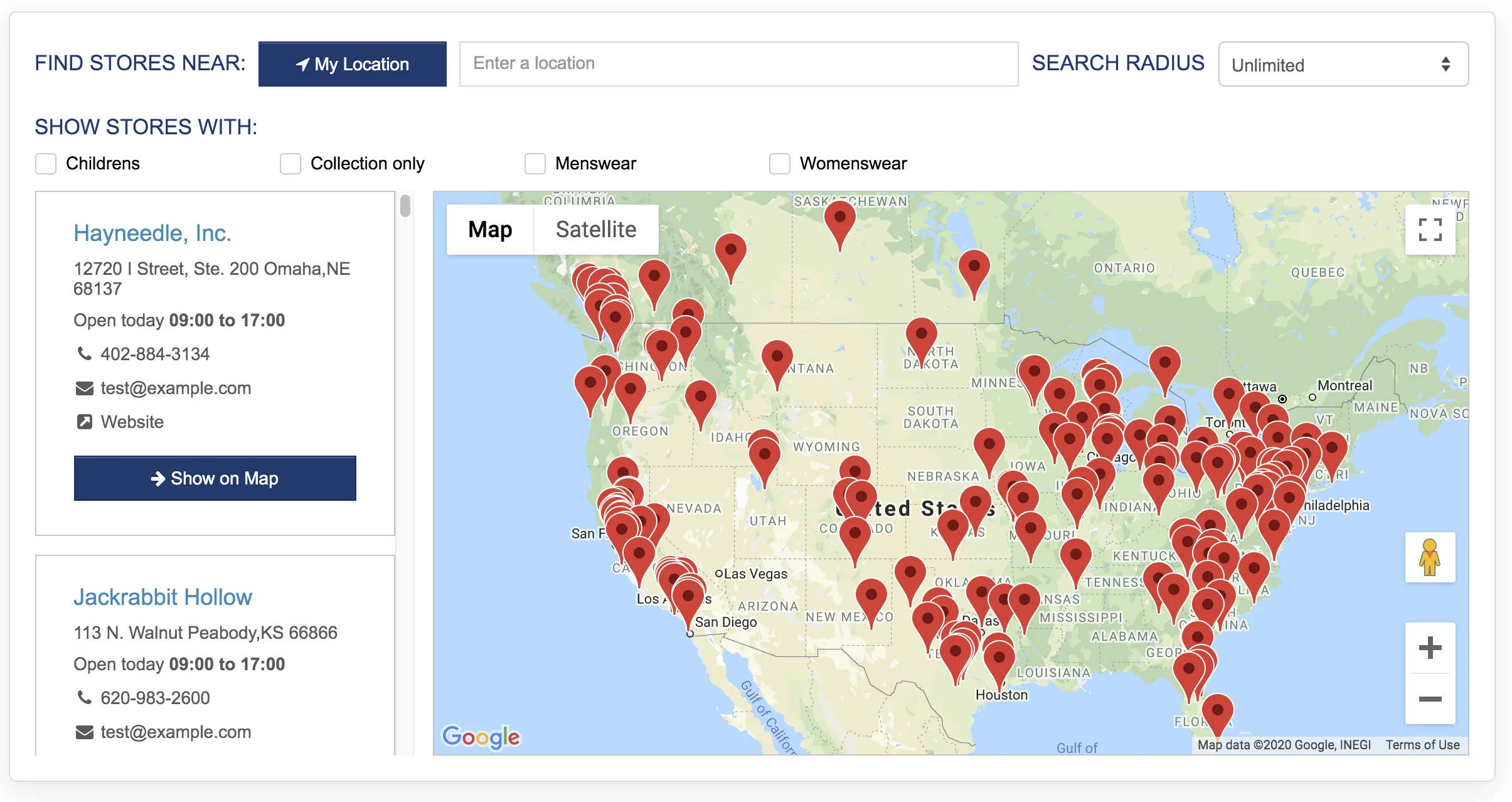
Default appearance of the StoreLocatorWidgets locator
Things I loved about StoreLocatorWidgets were the range of layouts available (6 in total) and the customization options built right into the admin console. While the default setup looks great out of the box, you can tweak colors, buttons, map color schemes, map marker images as well as add custom styling to match your website branding requirements.
The locator looks great, is fully responsive and has a frankly ridiculous number of configuration options to suit all common business requirements. It's integrated with Google Maps, Mapbox and Open Street Map and all plans include unlimited usage of their Open Street Map mapping service.
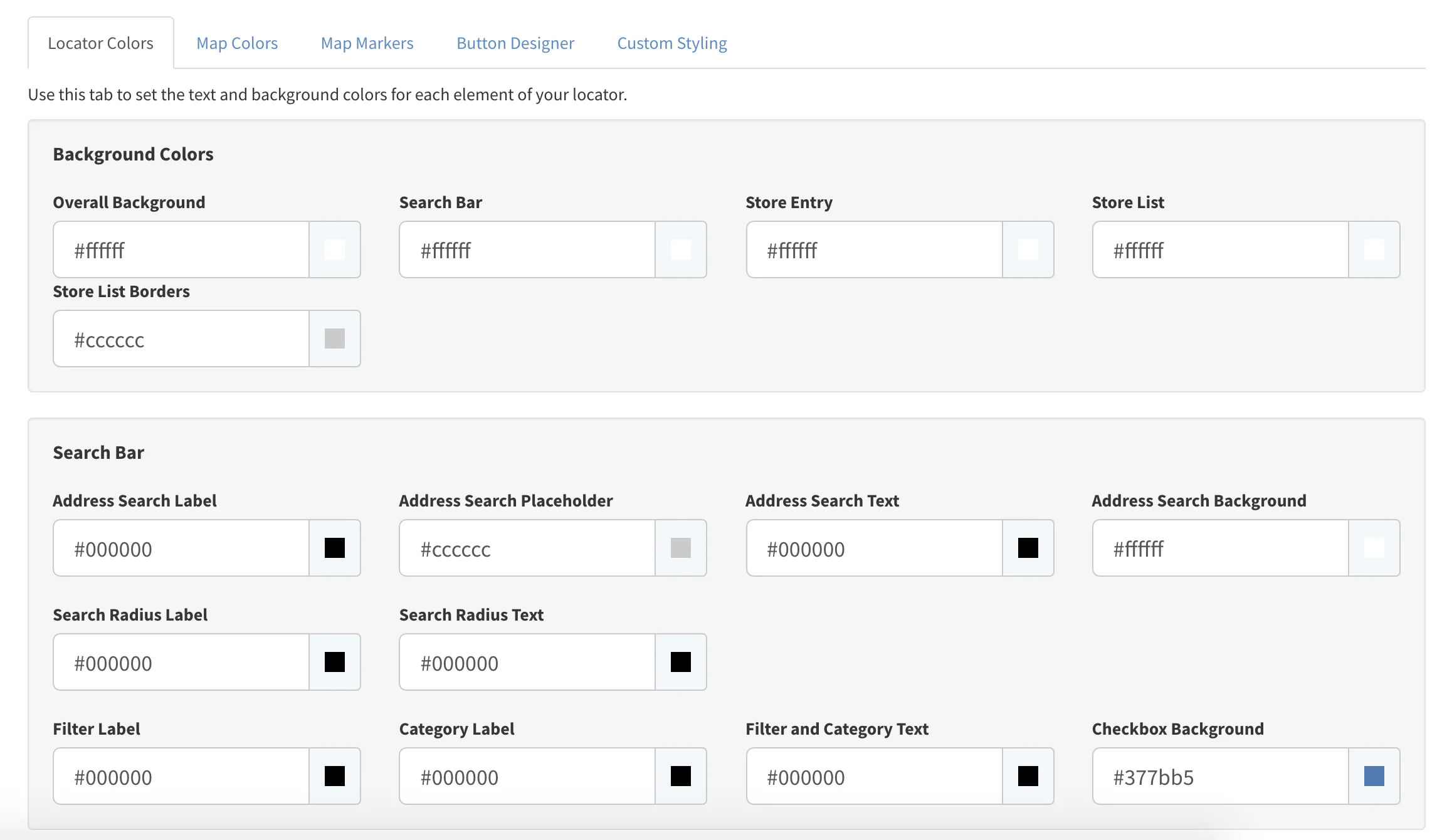
Adjusting the appearance of your locator
We liked the ability to add a location submission form so visitors can submit their own locations for your review and eventual inclusion into your locator. We also liked the built in review and ratings system which your visitors can use to rate locations.
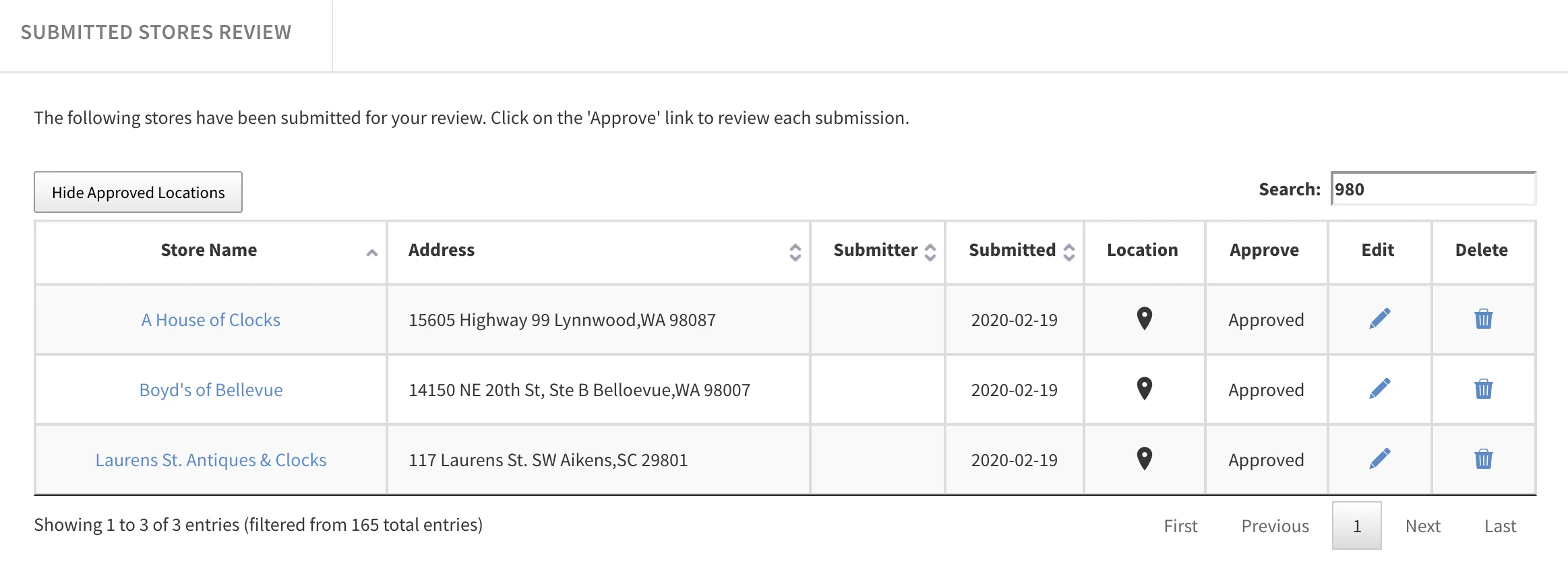
Reviewing submissions for new locations to add to your locator
What really sets StoreLocatorWidgets apart is the responsiveness and effectiveness of their super friendly online support. I bounced questions off them day and night via the web based chat system and their knowledgeable team always replied in less than a minute.
StoreLocatorWidgets prices are reasonable and their pricing plans are simple to understand, being based primarily around how many locations you need to have in your locator but with some additional capabilities added at each plan.
More On StoreLocatorWidgets:
Beautiful store locator design but not very customizable — ZenLocator.com pioneered the idea of having the store locator interface floating on top of the map and their locator and admin console have some lovely designer touches
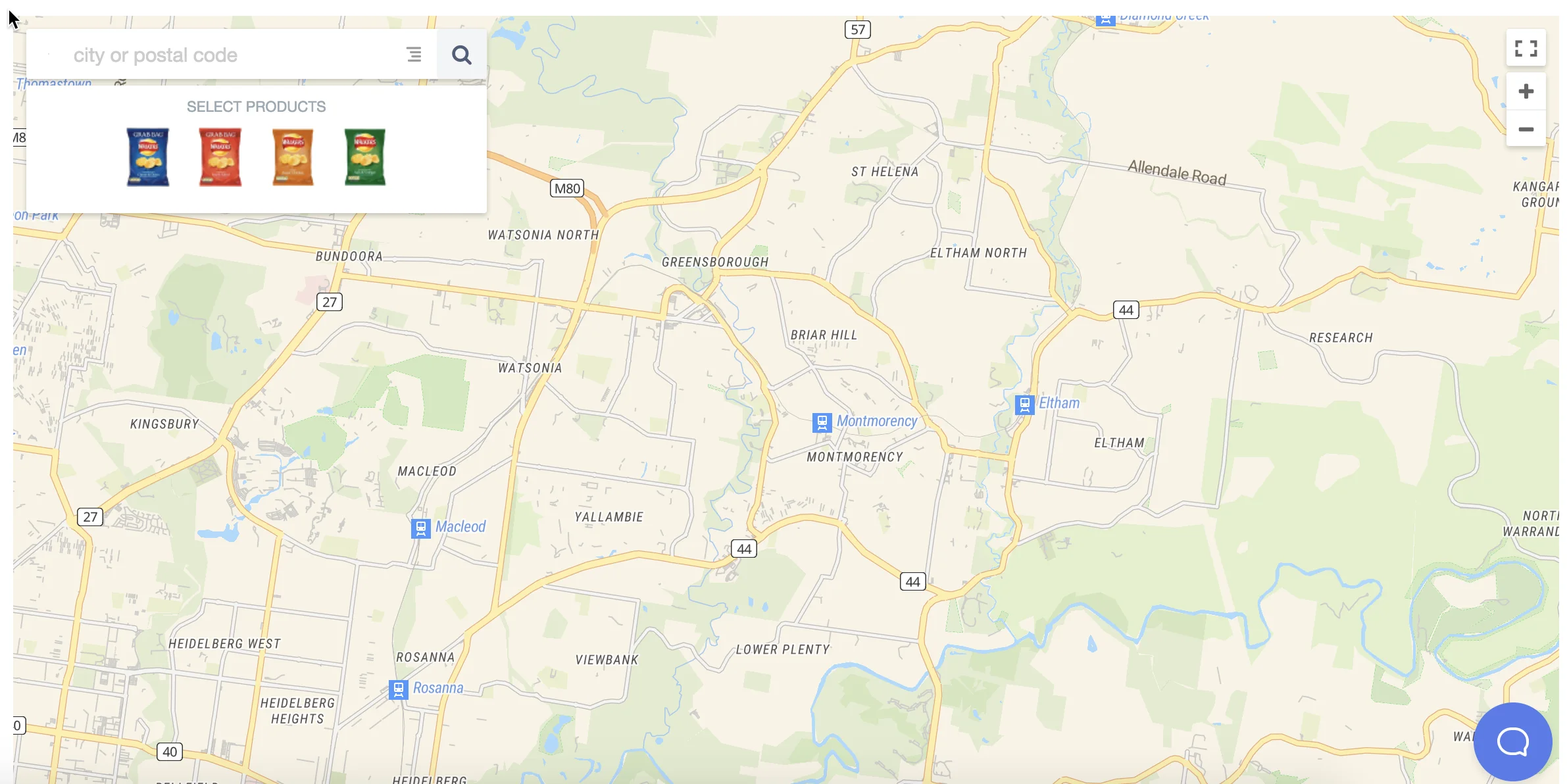
Default appearance of the ZenLocator store locator
There's no doubt that ZenLocator has an attractive, well designed product and first impressions are excellent. However, unless your requirements are very closely aligned with their design team's vision of how a store locator should work you're going to very quickly find yourself getting frustrated with the lack of flexibility. Even such things as basic as a search distance limit, being able to change the address search region so you don't show address results from Canada when your customers are all US based, being able to adjust the location sort order, prioritise certain stores above others, adjust the locator layout in any way, show map popup information windows about a location, the list goes on and on. The admin console is also badly organised and idiosyncratic in how it works. Be prepared to do a lot of clicking before you work out what goes where.
ZenLocator's product filtering in action
Having said all that, there's some great stuff in there. We love the groundbreaking design, the directory widget and the overall focus on high quality design and interaction throughout the product. Add a little more flexibility into the mix and it could be a market leader.
More On ZenLocator:
Well executed locator with some amazing features but also some disappointing ones — Storepoint.co is a mixture of delight and frustration as some of the excellent, well thought out features (Filter management and internationalization) sit alongside poor quality ones (Analytics, Online Stores and location imports).
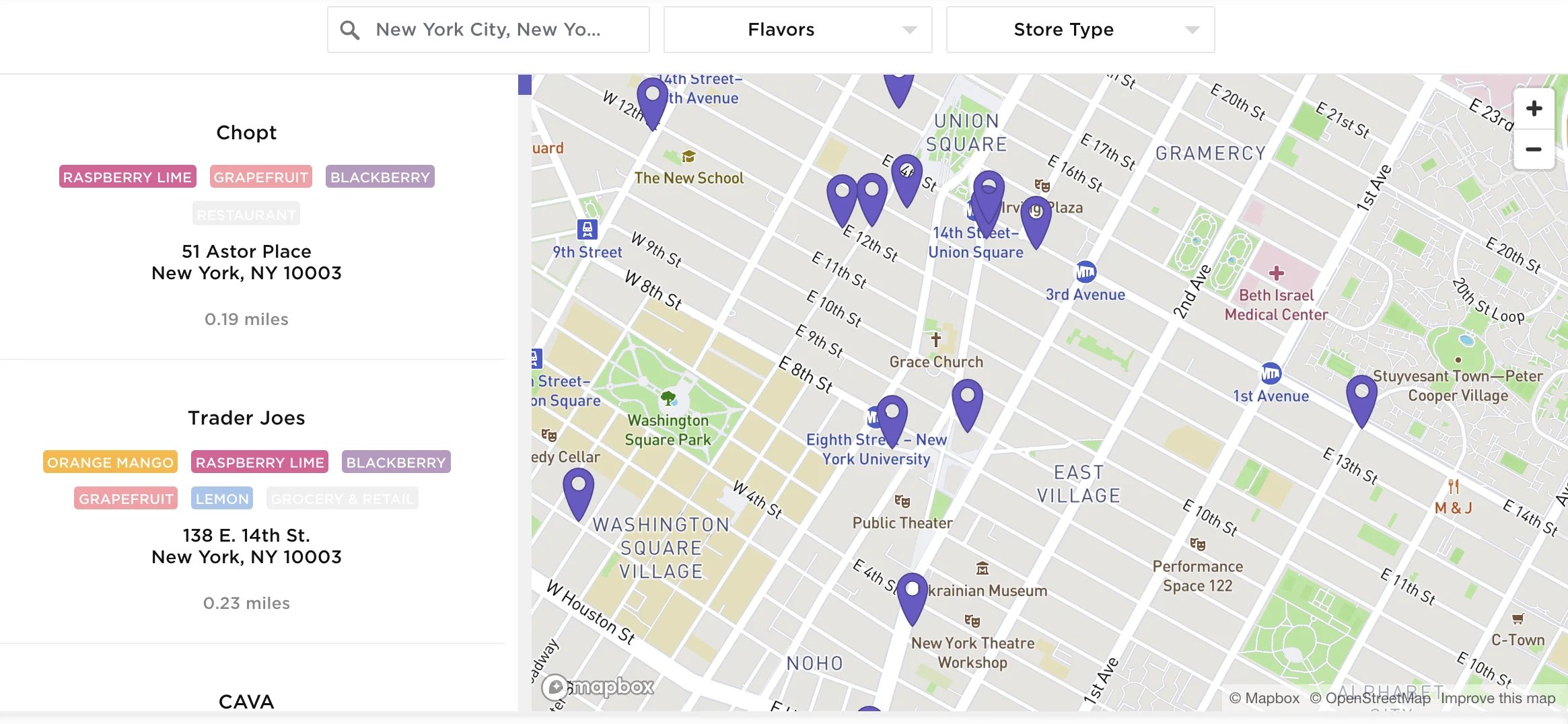
A customer implementation of the Storepoint store locator
Storepoint has a solid widget and covers most of the bases fairly well. In particular, its Filtering and internationalization features are both well thought out, easy to administer and easy to use.
There's some bugs that I wouldn't normally expect to see in a product of this maturity - the duplicate detection is broken and the Google Sheet sync imported only half the locations that it contained. Also some omissions - decent pagination of the store list is a must for a plan that is marketed as being 'Unlimited' and supporting Excel file imports is a must in the enterprise market. A couple of the premium features were also pretty weak - Analytics and Online Stores.
Storepoint's excellent Filter management page
Overall, I liked the locator itself and with a few updates and improvements around reliability and general capabilities, it would get a much improved rating. Until then, if you have between 100 and 200 locations then you're in the sweet spot of the Starter plan and it looks a competent, cost effective option; for businesses with more locations then other services look more capable and cost effective.
More On Storepoint:
Simple, reliable and backed by outstanding support — Stockist is built for brands that want a "where to buy" page listing their stockists. It has the best reputation of any store locator on the Shopify App Store, with a 5.0 rating from 353 reviews, and customers repeatedly single out its support team.
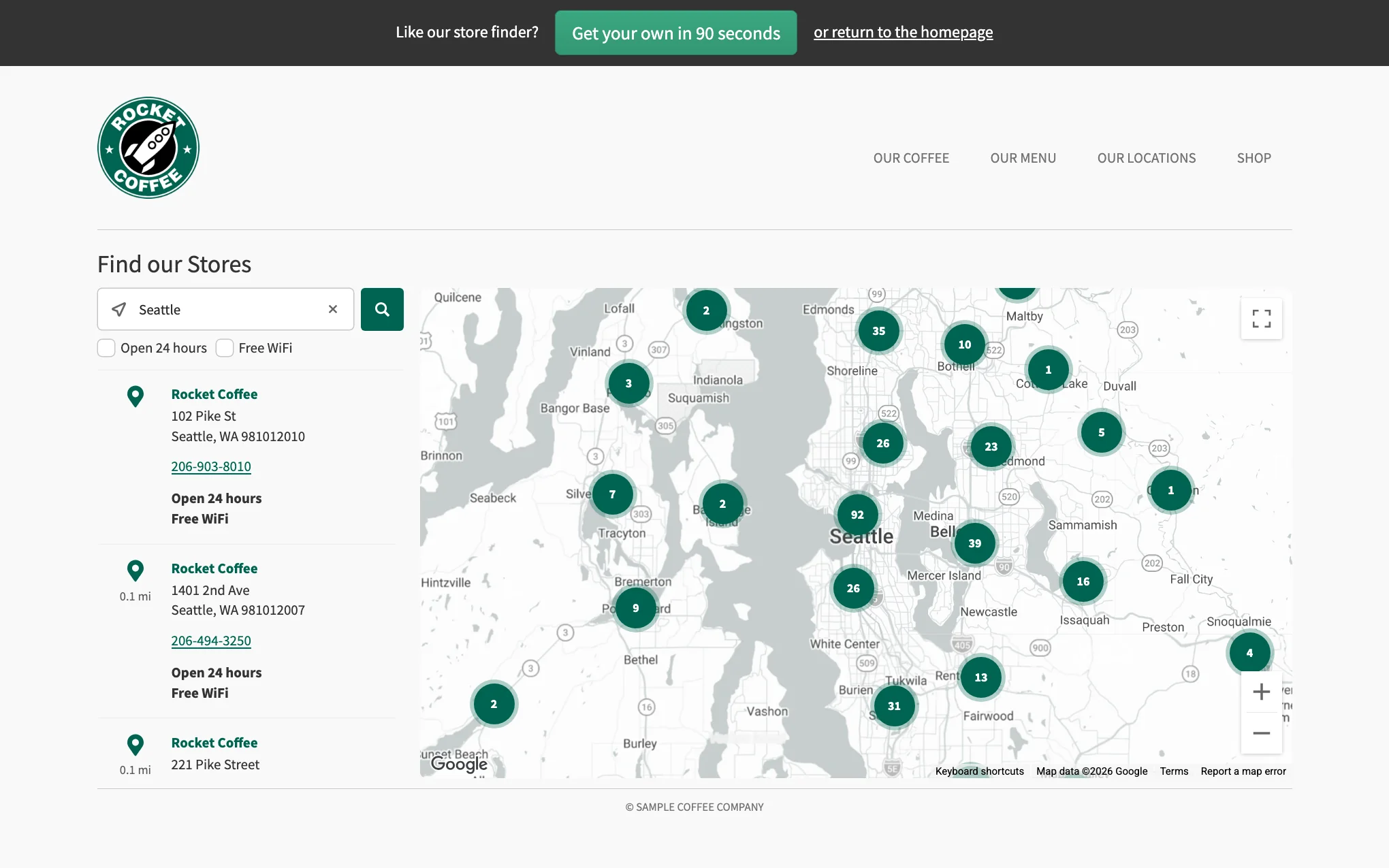
Stockist's demo locator
The locator has one clean layout that inherits your site's fonts and colours, unlimited yes/no filters with their own map pins, and CSV imports with column matching. It supports Google Maps and Mapbox, using your own key.
Plans are low-priced at $10, $20 and $40 a month, but features are tiered: search analytics and map themes start on the $20 plan, and Google Sheets sync needs the $40 plan and runs once a day. There's no duplicate detection or public API documentation, and standard plans stop at 2,000 locations.
More On Stockist:
Enterprise power, with enterprise complexity — MetaLocator has been running since 2007 and is built for larger organisations. It can sync locations from CRMs, route sales leads to dealers and publish SEO pages for every location, and it includes maps from MapTiler with no API key.
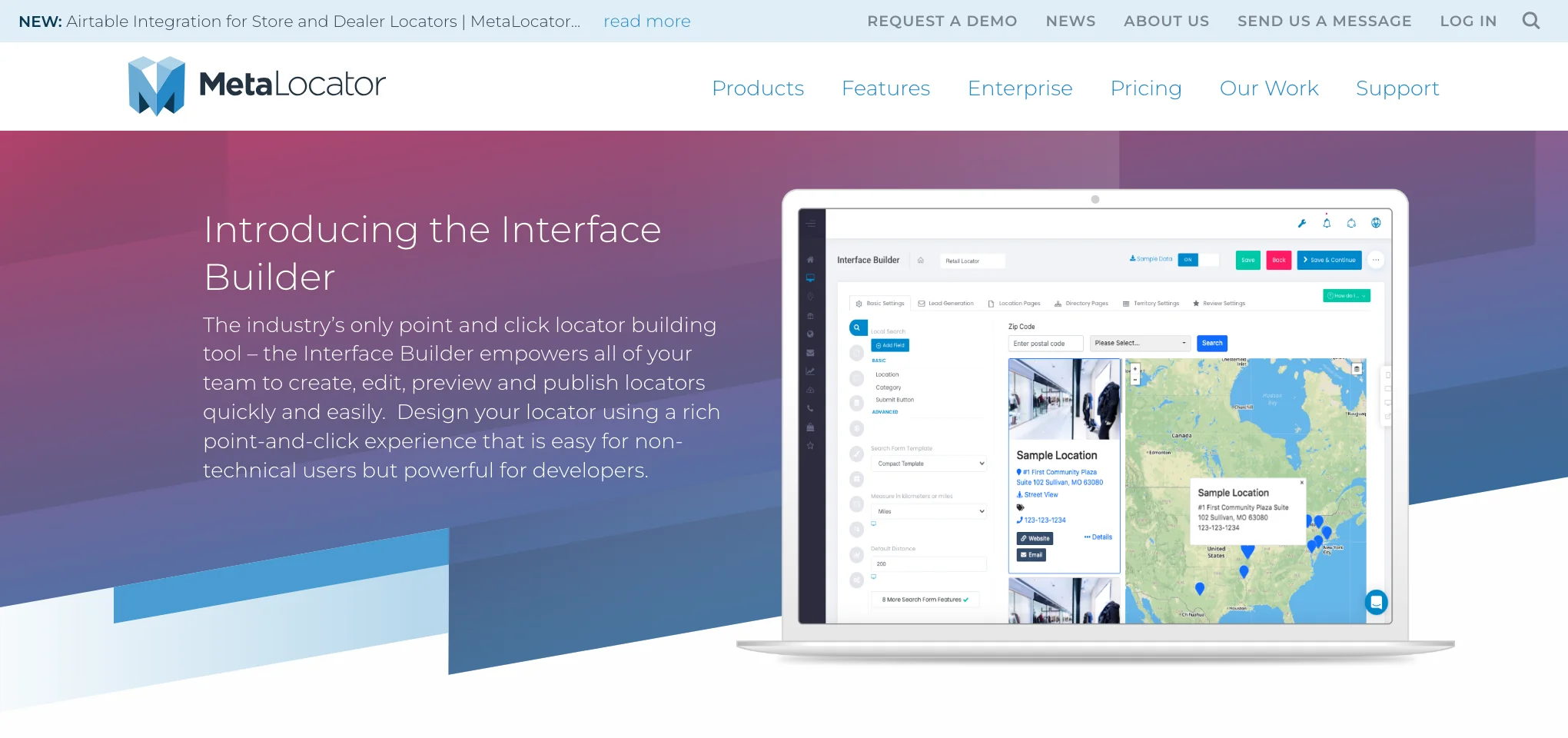
MetaLocator's Interface Builder
Filtering is a real strength, with nested categories, product finders and sales territories, and the Interface Builder gives fine control over layout. The $49 Growth plan covers 10,000 locations with lead forms.
The catch is where features sit. Google Drive, Airtable and Salesforce sync start on the $199 Scale plan, and the APIs and most other integrations are Enterprise only. Every paid plan also has a monthly page-view limit, and there's a learning curve.
More On MetaLocator:
Modern design and some unique capabilities — StoreRocket.io is a relatively new store locator service with a modern, attractive design that has reasonable customization capabilities and a few features that set it apart from the rest.
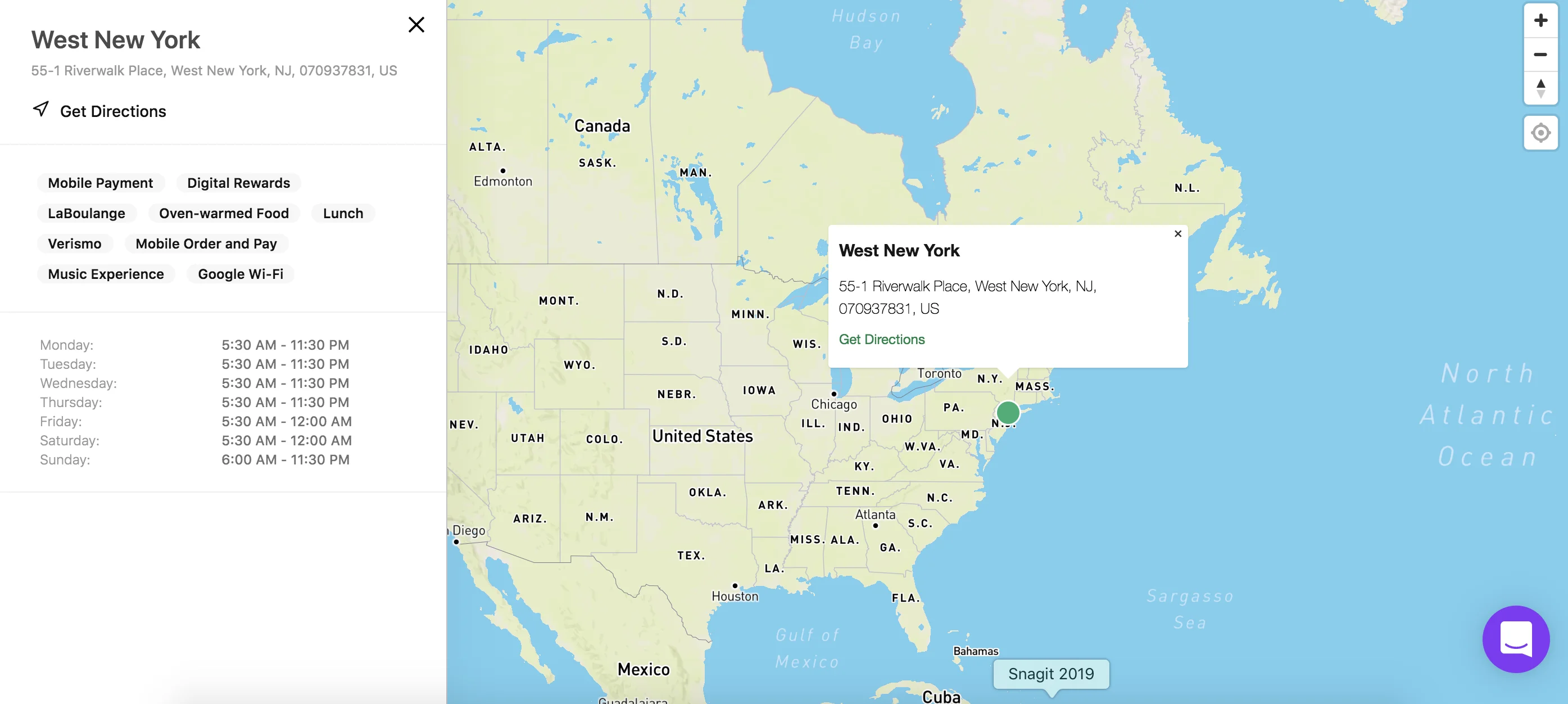
Default appearance of the StoreRocket locator
The basics are covered well here - the locator integrates seamlessly with modern website themes and the admin console has a good range of configuration and customization options including support for both Google Maps and Mapbox. You can tweak the map color schemes, add extra text elements and have a limited ability to adjust the widget layout.
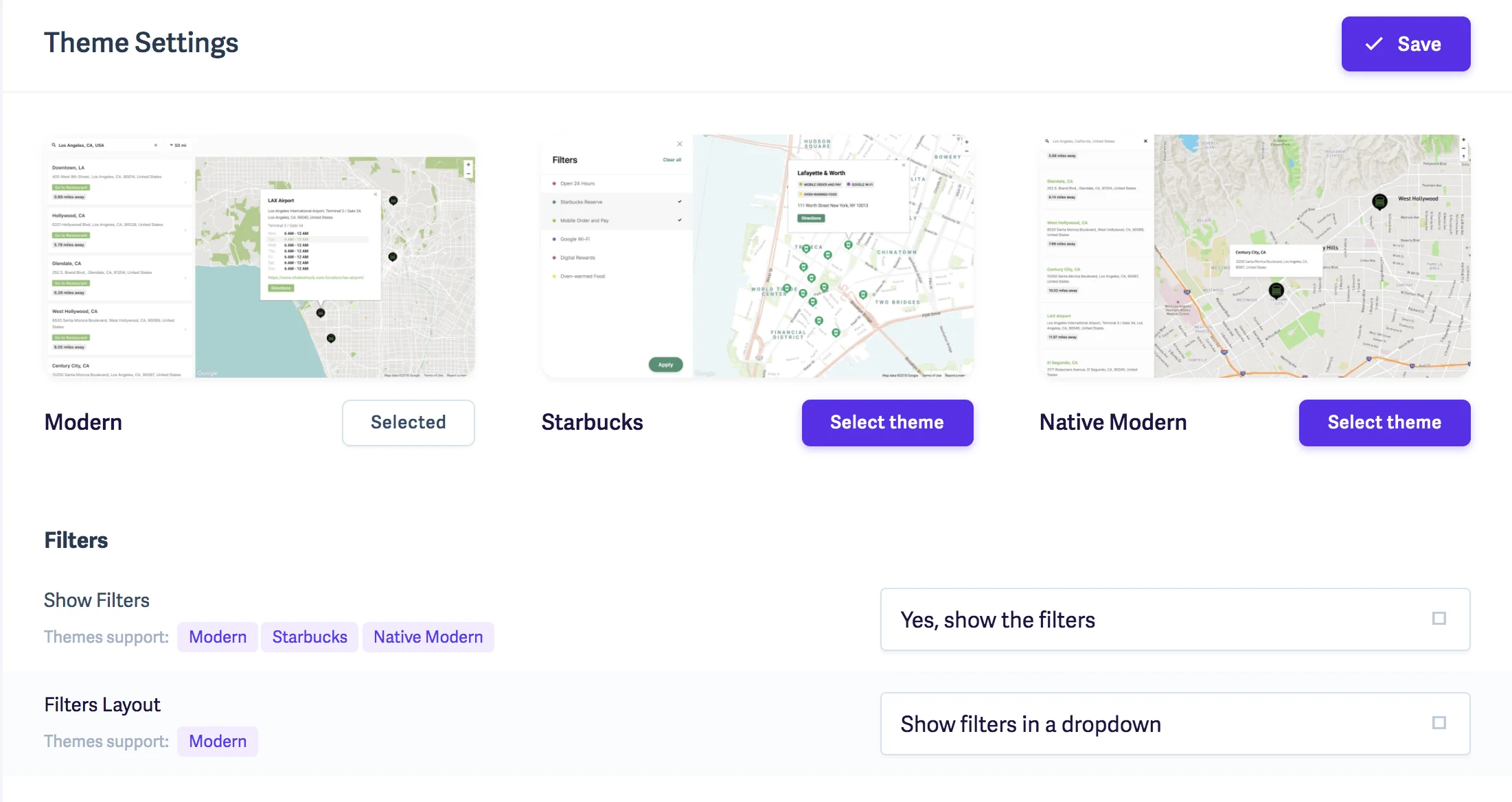
It would be great to have a little more variety in terms of what themes are available
We particularly liked the ability to generate sales leads from within the locator by asking customers for their details if a location wasn't found within their chosen search radius. We also thought the additional search bar widget was nicely executed and will be a real time saver for websites that want to link to their locator from another page.
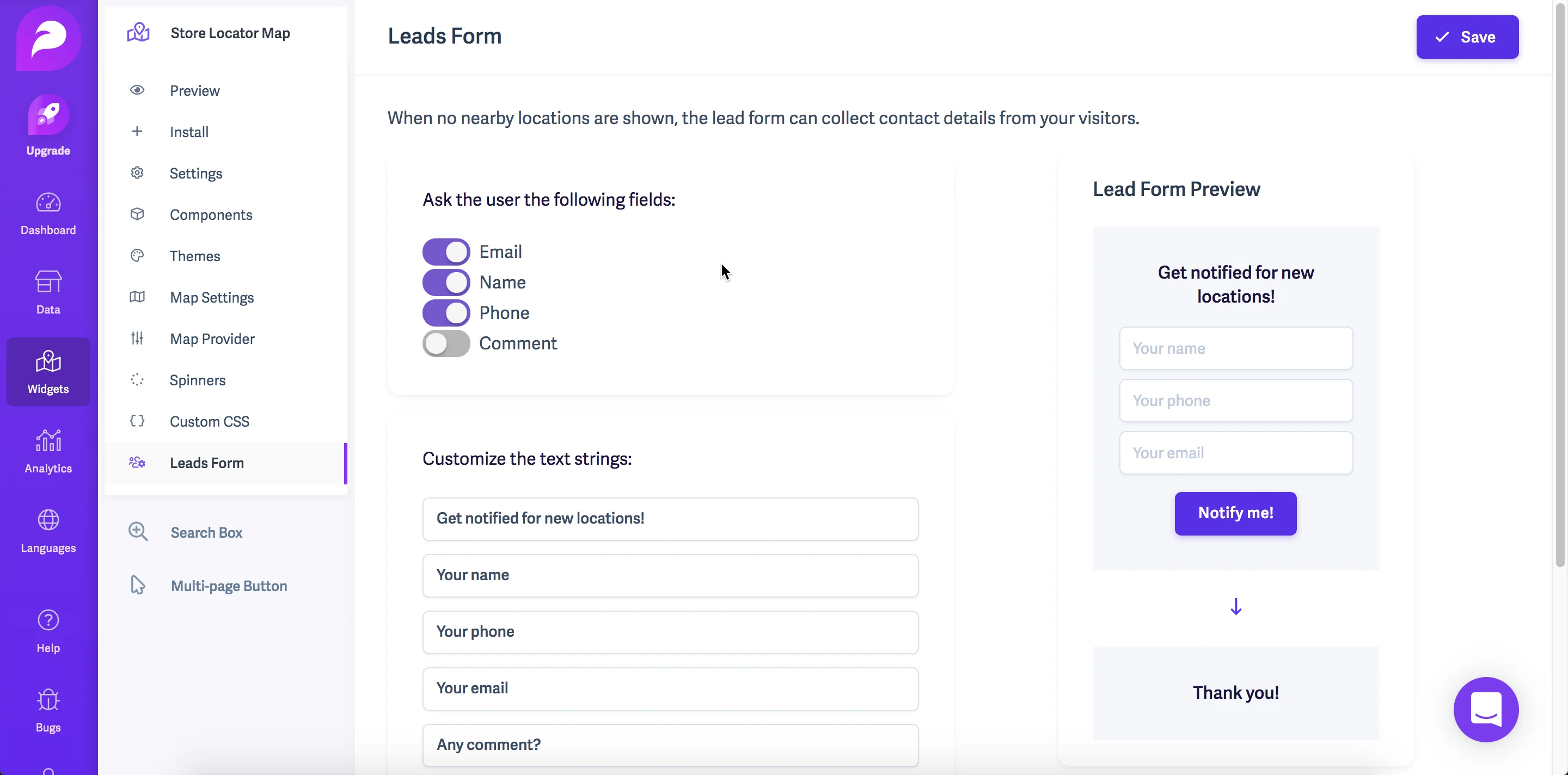
Setting options for the lead generation form
There are a couple of areas of concern; firstly the store management isn't really designed for large numbers (i.e. more than a few hundred) locations as it has limited sorting, paging, filtering and searching capability. One major issue is that the data import file doesn't support many of the store settings so you can't export to CSV, make changes in Excel and then reimport without losing work. The locator itself also seems to struggle when you have over a thousand locations, bringing our test laptop to a crawl.
StoreRocket prices for their low end plans are at the top end of the market with a few key features being withheld from the lower plans such as Google Sheet Sync and Location details search. The top Business plan offers Unlimited locations but we would not recommend using it if you have more than a few thousand locations for performance and manageability concerns. See our full review linked below for more details and insights.
More On StoreRocket:
Excellent value, with clear limits — Closeby is the best-value locator we cover: free for 5 locations, $9.99 a month for 100 and $19.99 for 10,000, with every feature on every plan. Its own maps are included, so there's no API key or map bill to think about.
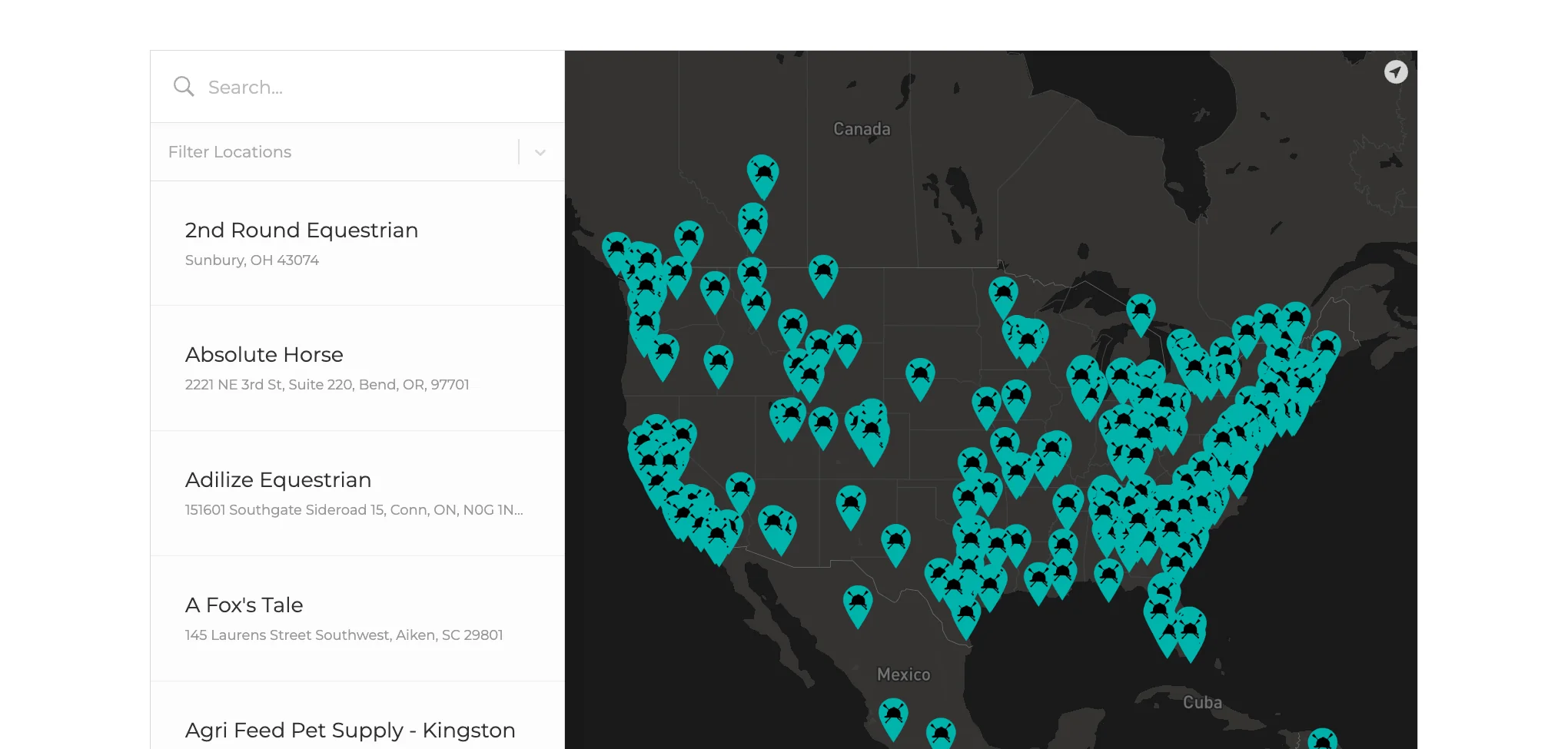
A Closeby locator on a customer's store
It looks good too, with 22 themes, three list layouts and custom pins, and Google Sheets sync is included for up to 2,500 locations.
The limits are just as clear. There's no Google Maps option, each map has one language, imports are CSV only and must match a fixed template, and there's no API. Support is by email from a very small team, and parts of the documentation are out of date.
More On Closeby:
A lot of locator for Shopify stores on a budget — Storeify Store Locator is a Shopify-only app rated 4.9 from 207 reviews. For $8.99 to $39.99 a month it offers 8 layouts, store detail pages, product search, a dealer registration form and AI-assisted translation, and there's a free plan for one location.
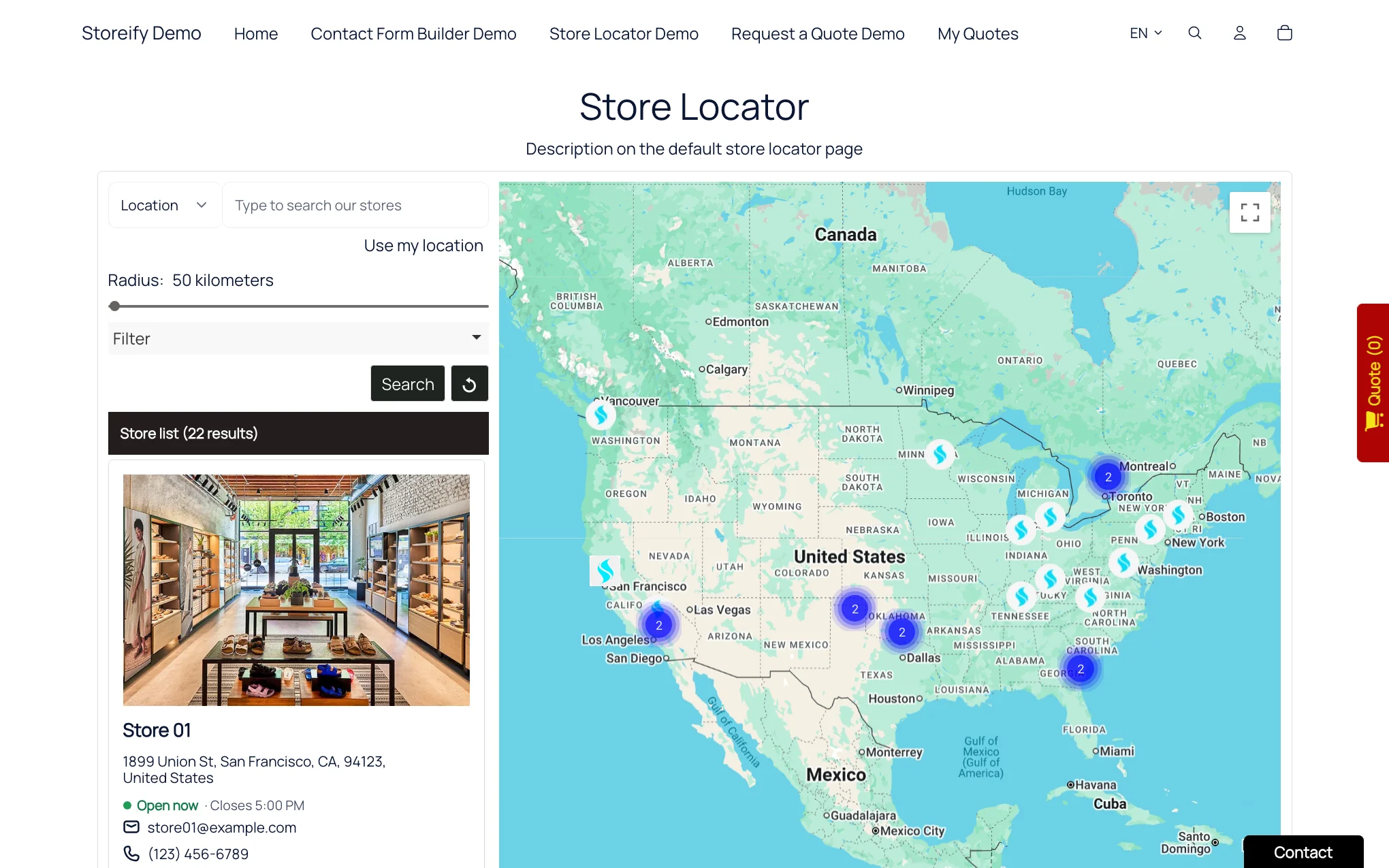
Storeify's default locator on its demo store
Its Google Sheets sync is well designed, applying changes within minutes and guarding against accidental mass deletions.
It uses Google Maps only, and you must set up your own Google API key and billing account, which some merchants find confusing. Analytics are basic, there's no API, and the locator can't follow you if you leave Shopify.
More On Storeify:
Once the market leader, now trailing the pack in terms of features — As one of the first in the group of groundbreaking store locator subscription services that launched around 2012, Storemapper has been resting on its laurels compared to some of the modern store locators which have launched since then. Sure, it got a nice new landing page around a year ago but the administration dashboard was still positively archaic. The good news is, that changed in late 2020 with the launch of a brand new dashboard which drags the creaking old Storemapper dashboard into the world of responsive design with an elegant and easy to use interface that will appeal to a new generation of store locator users.
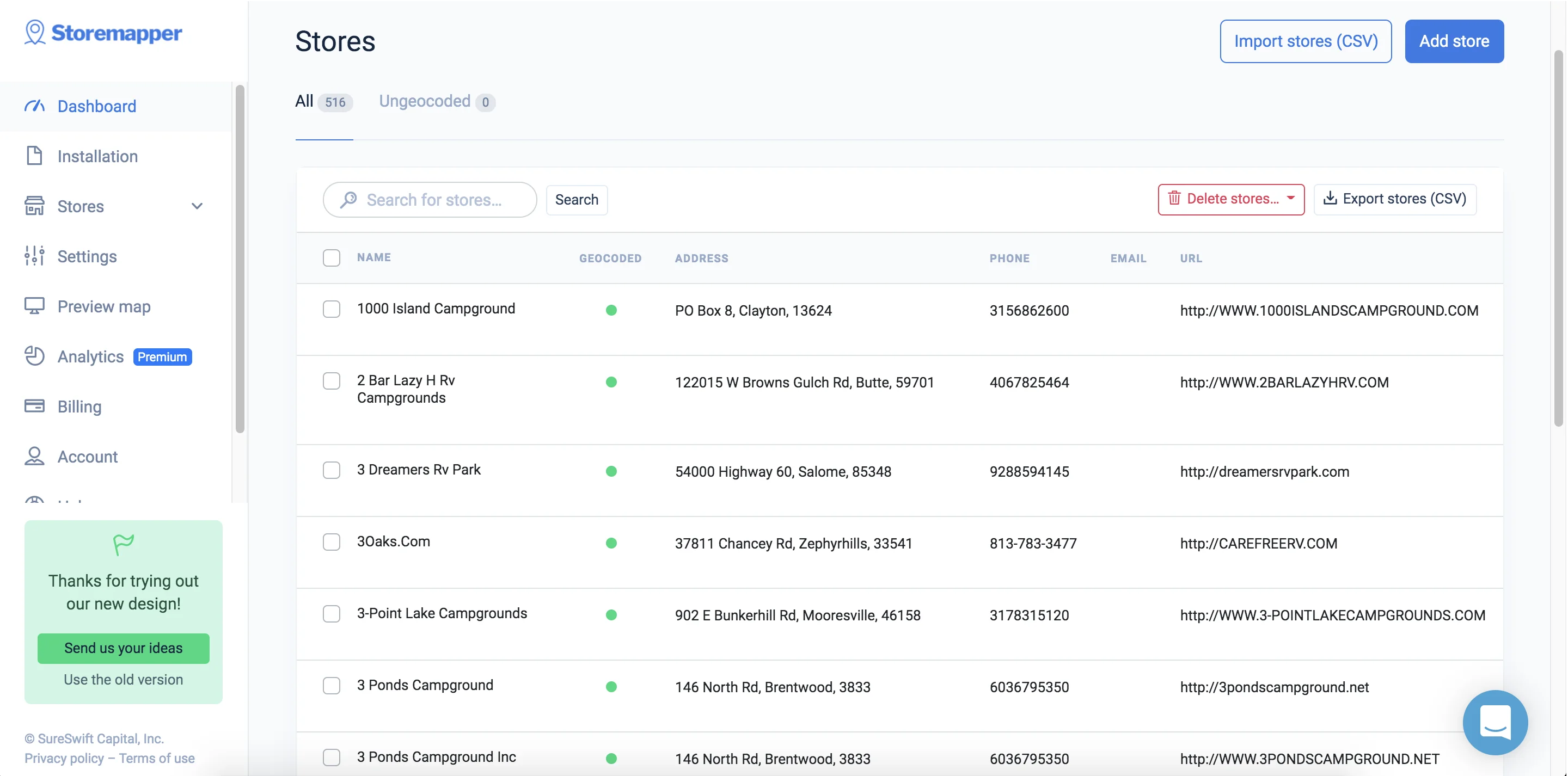
The new Storemapper dashboard
The locator itself is solid having gone through a couple of design refreshes over the years. It's fully responsive, supports basic filtering, and can be used with both Google and Mapbox maps as is fairly standard.
The Storemapper locator in action
The bad news: this still, unfortunately, leaves some major gaps in the feature set of the Storemapper locator. The Filtering, Analytics and Appearance sections are all at the basic level and well behind some of the more advanced locators that it is competing against. On top of this, there's some major gotchas in the operational capabilities of the locator - the Google Sync permission requirements are a major security concern, the import process is frustrating as it either fails with no error message or requires you to redefine the column mappings every import, and, finally, CSV files are the only supported imported format.
Overall this leaves Storemapper in the lower half of the store locators that we've reviewed to date.
More On Storemapper:
Limited locator service missing some key capabilities — Mapply is an older store locator service which feels like it hasn't received much in the way of developer attention in recent years. It's missing critical features such as automatic geolocation and address autocompletion which are standard across all major competing store locator services.
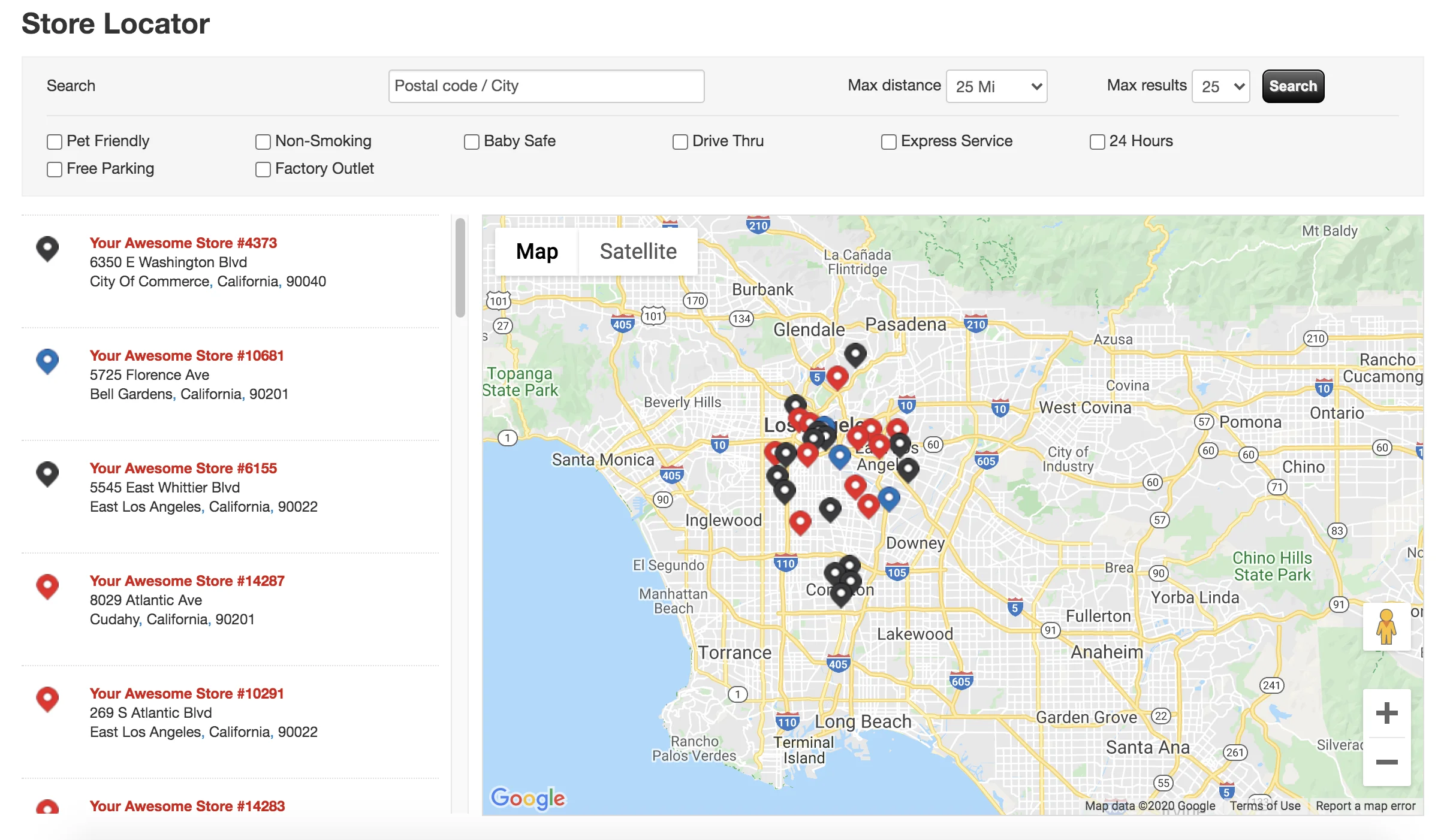
Default appearance of the Mapply locator
A particular concern during our review was the bulk import process which is not really fit for purpose. It's slow, allows only 1,000 locations a day to be uploaded and you have to keep your browser window open while it runs as it runs in your web browser window.
The painful Mapply import process
There's really no major highlights that we can list here; it has limited internationalization support, the reporting is extremely limited and it's impossible to change the layout or styling beyond the absolute basics.
If you have 1-10 stores and if you don't mind it's limitations then the $4.99 a month plan is the lowest price we've seen anywhere that allows you to add a store locator to your website so if your business fits into that bracket you might have a winner here. Otherwise, I can't see any reason why you would choose to go with Mapply instead of another more modern, capable store locator service.
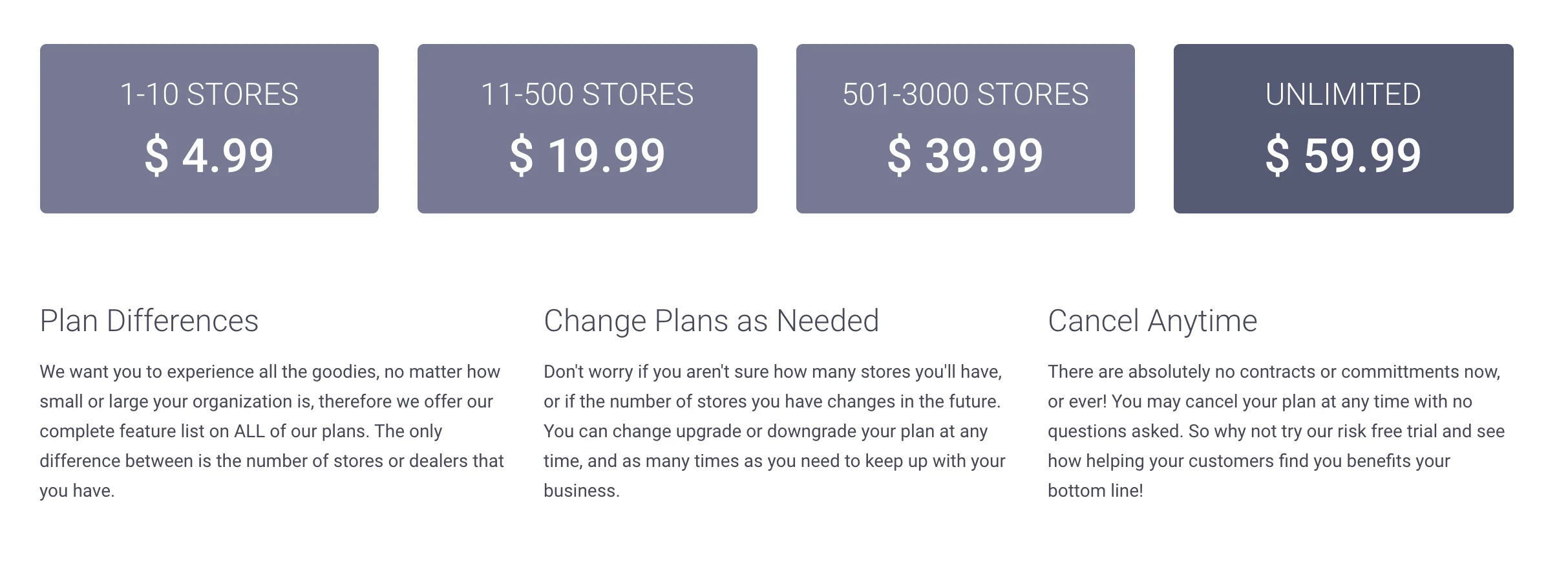
Mapply pricing plans
More On Mapply:
Next Steps
Now that you've read my overview of the best store locators on the market, if you'd like to dive into the details then I'd recommend digging into one of my more detailed reviews below so you can finalize your decision: